
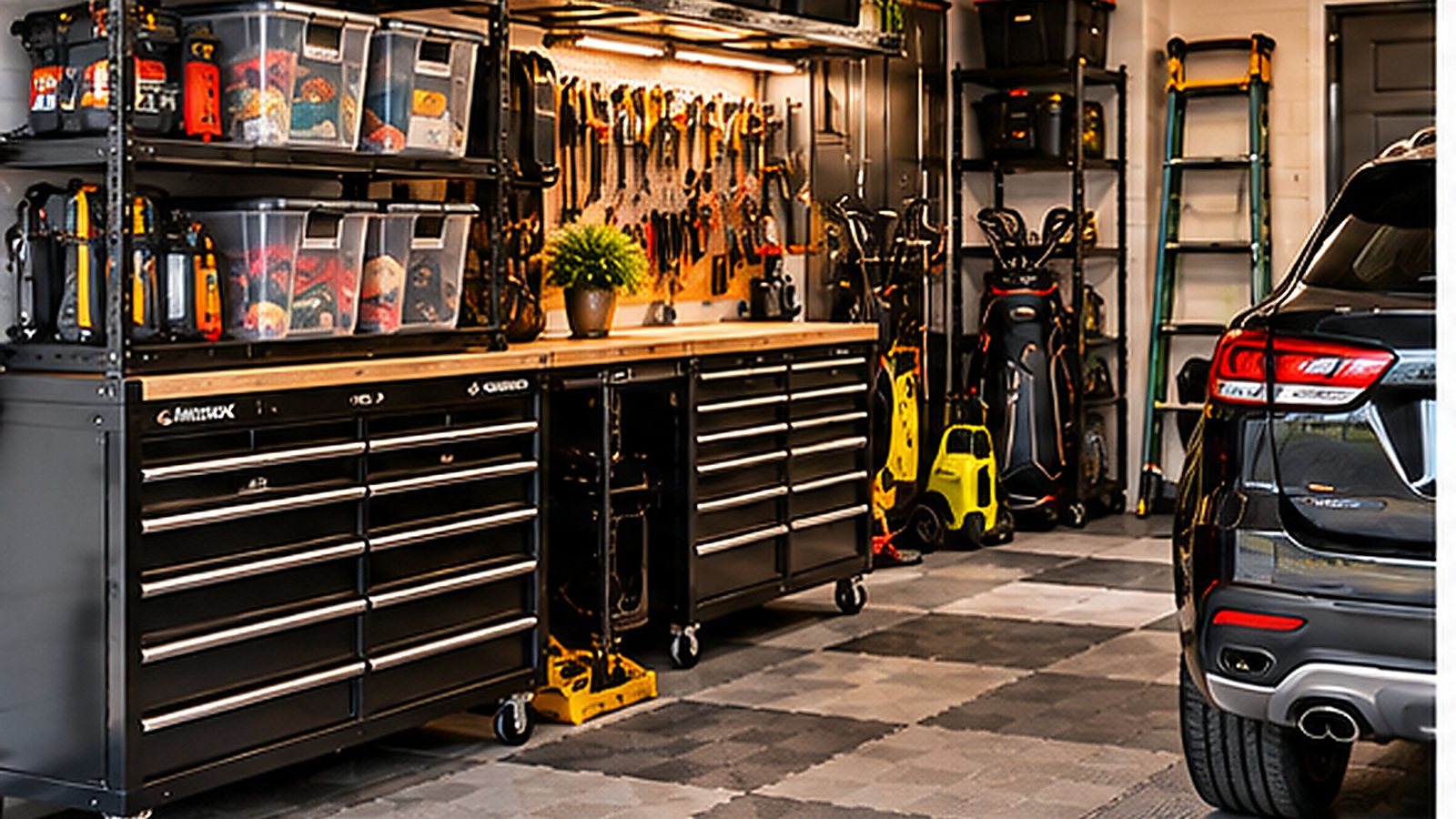
A better garage starts with a system that matches how you actually use the space. Start with the biggest source of clutter, measure carefully and make changes one zone at a time.
Start with the parking footprint
Park first and mark the areas that must stay clear for doors, walking and unloading.
Design a clear path to the house
Keep the most-used walkway free of bins, bikes and temporary drop zones.
Put categories together
Keep automotive supplies together, sports gear together and tools together.
Prioritize frequently used gear
Easy-to-reach storage should go to the items you use most often.
Question every floor item
If something can safely live on a wall, shelf or rack, consider moving it.
Use closed storage selectively
Cabinets create visual calm, but keep everyday items convenient.
Create one drop zone
Give incoming packages, donations and project materials one temporary home.
Upgrade the lighting
Bright, even lighting improves visibility and makes the garage feel cleaner.
Choose easy-care surfaces
Garage-appropriate floors and work surfaces can simplify maintenance.
Leave room to grow
Avoid packing every shelf completely full; open capacity makes the system easier to live with.
Add simple labels
Labels reduce guesswork in shared household storage.
Store hazardous products appropriately
Follow labels and local guidance for chemicals, fuels and other hazardous materials.
Create a cleaning station
Keep a broom, dustpan and shop towels together for quick resets.
Rotate seasonal gear
Move in-season items forward and off-season items higher or farther back.
Aim for a ten-minute reset
If cleanup always takes hours, simplify the system until a quick reset is realistic.
Build a system you can maintain
The best garage setup is the one your household will actually use. A few well-planned upgrades usually outperform a garage full of organizers with no clear purpose.